
Develop and Verify
Certification through the LiderA system is voluntary. LiderA’s application involves assessing the performance level of the case under analysis (using the available model), classifying the degree of sustainability achievement (from G to A++) achieved with the information and solutions defined or existing.
Visit website here: LiderA
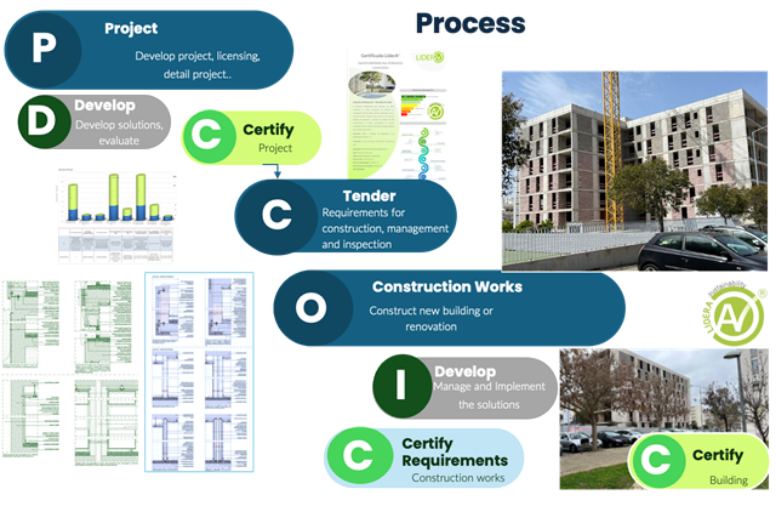
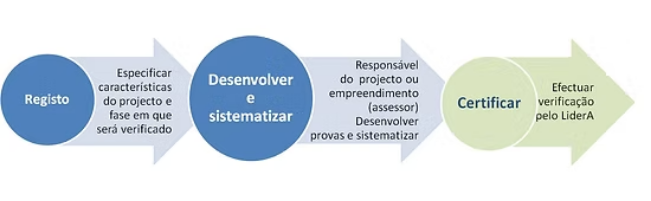
To improve performance, after the assessment, identify opportunities for enhancement, evaluate their environmental, social, and economic impacts, select suitable opportunities, develop them, and verify their effectiveness. To obtain certification, you need evidence of the various aspects considered. LiderA certifies overall performance in the pursuit of sustainability. It can also certify good performance in specific areas, such as energy, water, materials, waste, risks, resilience, and life cycle costs, among others.
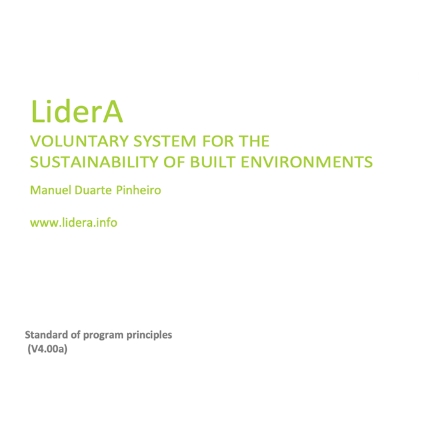
LiderA Standard
The LiderA system, its approach, and application have been the subject of numerous publications and presentations, including a book on Environment and Sustainable Construction (2006), Sustainable Real Estate (2014), as well as dozens of master’s and doctoral theses, and various documents. The current version of the LiderA system is version 4. The system explanation is available in the LiderA V4 standard.
What levels of performance?
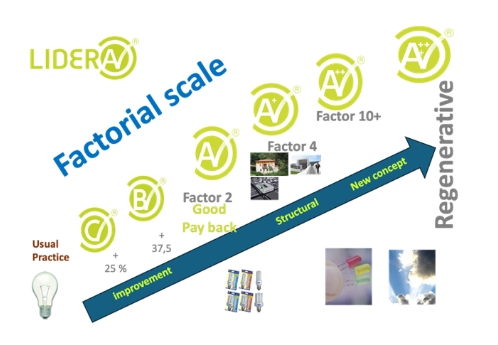
The system rates performance on a scale of 0 to 10, which is then converted into letters from G to A (up to A+++). Level 1 or E indicates current (or reference) practice, while level 2 or A typically denotes performance roughly 50% better than level E. Level A+ corresponds to a Factor 4 (75% improvement over level E), and A++ indicates a Factor 10 (90% improvement over level E). In rare instances, an A+++ level may be assigned, signifying a regenerative state.
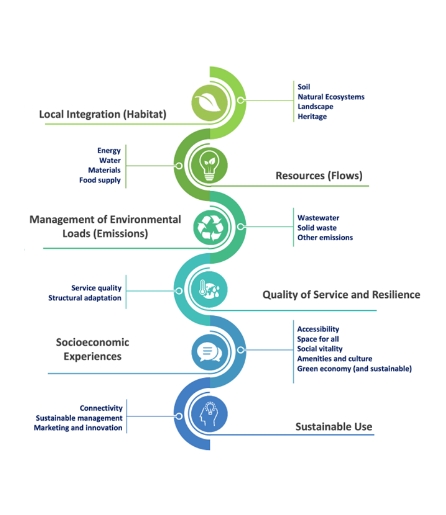
Areas and parameters
The twenty (20) areas and forty (40) programmatic criteria are assigned weights that support the calculation of the overall performance level on the same scale of 0 to 10, covering local integration, resources, loads, quality of service, resilience, socioeconomic experiences, and sustainable use.