
Sustainable Management
In the 1990s, linked to a new aspect of sustainable development, the 5th Community Environmental Action Programme introduced the possibility of voluntary mechanisms for organisations, notably eco-management and auditing (EMAS), and for products, the ecolabel.
With the emergence of the ISO 14000 environmental management series within ISO, the application and certification of environmental management systems (ISO 14001:1996) gained momentum, often combined with quality management systems (ISO 9001). Over the years, the scope evolved, integrating the life cycle and environmental performance considerations, and even introducing new systems for social and economic aspects, effectively pursuing sustainability.
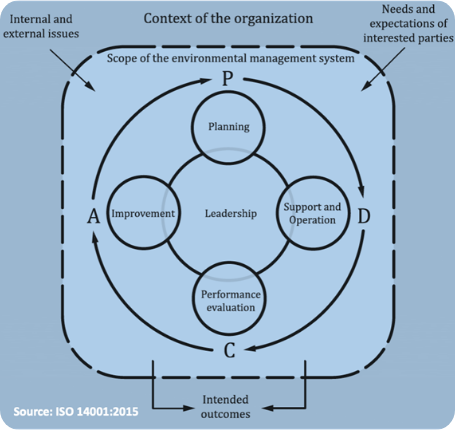
Environmental and Sustainability Management Systems
The need to comply with increasing environmental, legal and other requirements, as well as to pursue higher environmental performance (such as reducing carbon emissions), encourages organisations to adopt environmental management methods. These range from environmental management plans to informal or formal (documented) and certifiable environmental management systems, like ISO 14001, which promote continuous improvement.
From Environmental Life Cycle Assessment to Eco-labelling
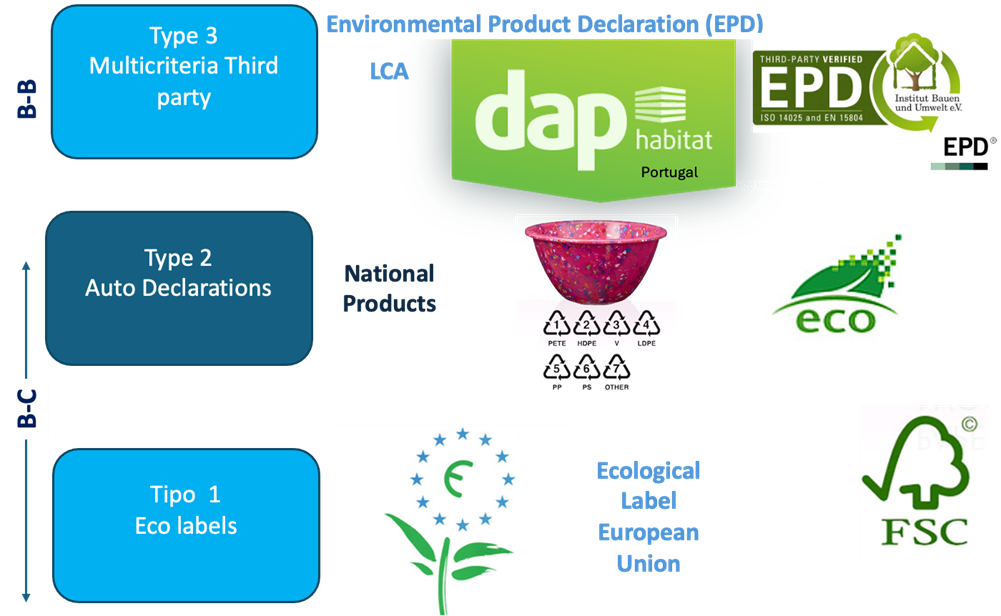
There are several methods to assess the environmental performance of products and services, from environmental life cycle assessment (LCA) to business-to-business (B2B) labelling systems with technical details like environmental product declarations (EPDs), and even business-to-consumer (B2C) labels. One of them is the European Union Ecolabel (EUE), a voluntary scheme that certifies products and services with high environmental standards throughout their life cycle.
Responsibly Sourced Products and Materials
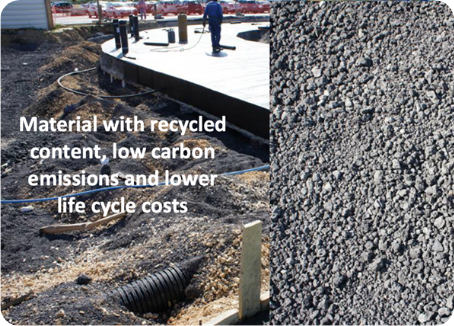
The demand for services and products that incorporate environmental considerations and performance is growing. This may sometimes require adjustments. If it is not possible to adopt already environmentally certified products for the solution in question, consider criteria, such as Lidera (P12), to incorporate responsible sourcing and ensure a balance of environmental, social, and economic performance.