
Strategic Plans
Strategic Plans
The development and definition of short-, medium-, and long-term strategic environmental plans (SEPs) for areas and buildings are conducted, considering an integrated environmental perspective and recognising ecological sensitivities. They also address the demand for energy transition by incorporating climate mitigation efforts, such as decarbonisation (and the pursuit of carbon neutrality), resilience, and adaptation to climate change. Additionally, these plans focus on developing the circular economy, biodiversity, natural capital, as well as well-being and health.
Approach
The comprehensive approach to support services in developing a strategic environmental plan for areas is based on five sequential steps, each of which will be documented in a report. It begins with (1) organising environmental information (such as environmental dynamics, soil, water, ecology, infrastructure, urban areas, and other factors), (2) evaluating the requirements, challenges, and opportunities for both natural and built environments, and (3) proposing options for environmental strategies and programmes for each area. These proposals will be (4) discussed with relevant entities in meetings and potentially a workshop, possibly involving stakeholders, and finalised with the (5) proposed plan.
SEA and Plans
In collaboration with the IPA, the Strategic Environmental Assessment (SEA) application has been developed. The SEA monitors the development of the plan, and consultation with entities and stakeholders will be integrated into the SEA process. Thus, the systematisation of environmental dynamics within the plan is combined in the SEA with the Scoping Report (Critical Decision Factors), which will be submitted for consultation. The assessment of challenges and opportunities, as well as potential strategies, is informed and evaluated by the Preliminary SEA.
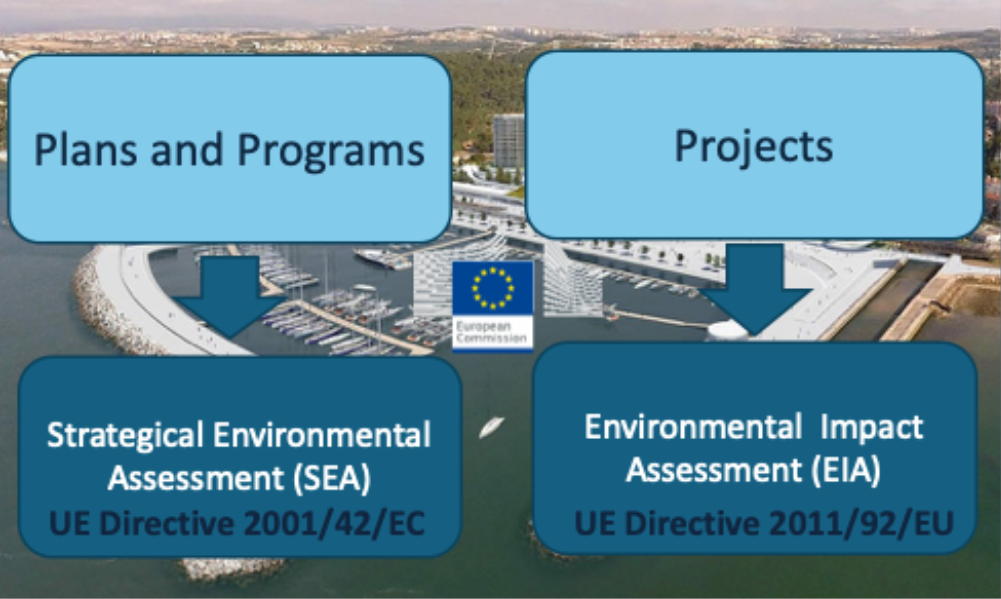
The proposed SEA plan will be presented and evaluated in the SEA, which includes a public consultation, consolidation of the plan, and consideration of consultation outcomes. The SEA will be updated, and an environmental statement will be prepared. Guidance and comments arising from each consultation will be provided and considered in the plan and subsequent SEA documents.
Plans provide explicit guidance and serve as a reference
This approach helps plans integrate the environment into decision-making and planning. They serve as guiding and structuring frameworks for incorporating the environment and pursuing sustainability in areas and projects, blending the natural dimension with the built environment and clearly and objectively defining the development to be undertaken. They can also consider the evolution of the context with scenarios and account for the possibility of flexibility and adjustment.